
The AI conversation is loud. And if you work in project controls, you’ve probably sat through at least one vendor presentation where “AI-powered” was used to describe something that felt like a slightly better spreadsheet.
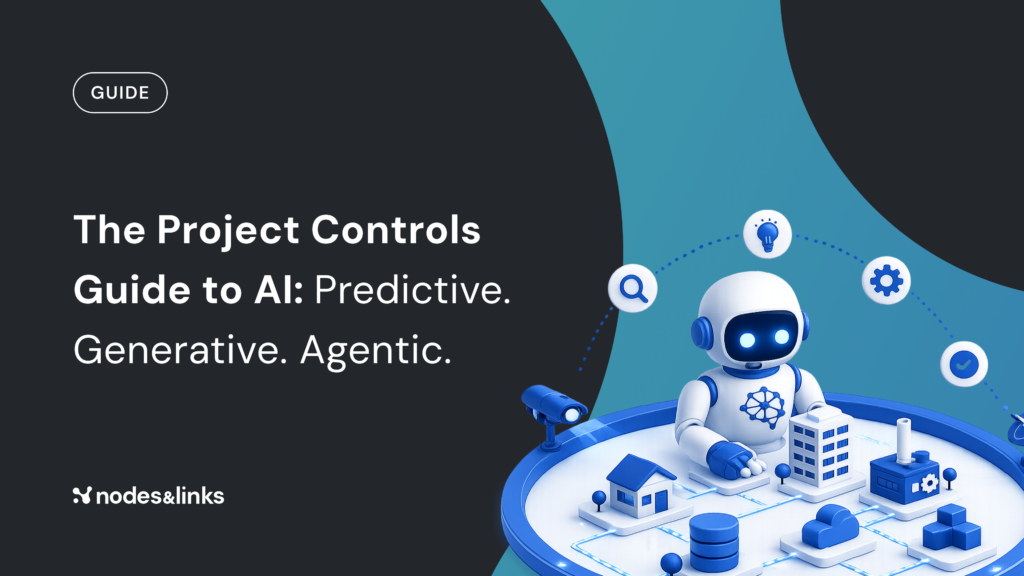
The problem isn’t AI. It’s that Predictive, Generative, and Agentic AI are three completely different capabilities — and most platforms use the same word to describe all of them. That’s most of the confusion right there.
This guide cuts through it. In plain language, with no hype.
Inside the guide:
- Why "AI-powered" means three different things
A plain-language breakdown of Predictive, Generative, and Agentic AI, what makes them distinct, and why most platforms don’t explain the difference.
- Predictive AI: forecasts built on how your projects actually behave
How machine learning predicts activity durations, completion dates, and delivery risk using your real productivity rates, and gets more accurate the more project data you capture.
- Generative AI: from data to narrative, without the grind
How it drafts schedule narratives, risk summaries, stakeholder updates, and change requests, and interrogates a 200-page contract for key schedule obligations in seconds.
- Agentic AI: what autonomous actually looks like on a live project
How it monitors your schedule continuously, escalates risks when thresholds are crossed, and surfaces recommended actions, not just flags, across schedules, costs, and risks simultaneously.
- A role-by-role breakdown
What each type of AI means in practice for schedulers, project controls engineers, project managers, PMO leads, and exec sponsors.
- The honest limitations of each
What Predictive, Generative, and Agentic AI genuinely can’t do, and why that’s worth knowing before you evaluate any platform.