
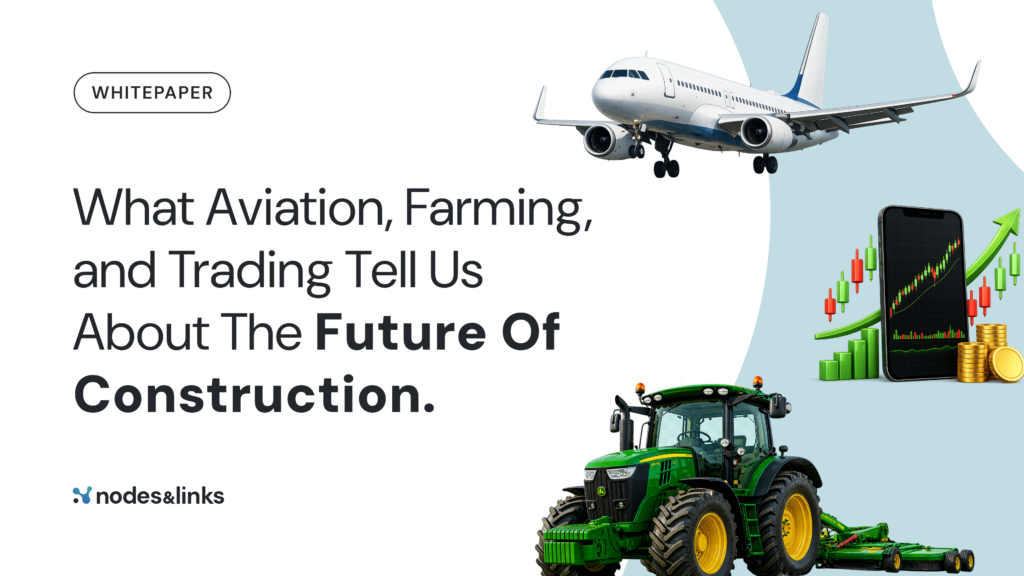
Every industry has a moment. The point where the technology finally exists to replace the old operating model with something structurally better.
Aviation had it. Farming had it. Trading did too. In each case, the shift didn’t happen because those industries were smarter or more forward-thinking. It happened because the technology reached maturity. As a result, the professionals who moved gained stature.
In each case, the shift created two kinds of change: a productivity shift and a capability shift. The productivity gains were real and significant. The capability shift was where the bigger transformation lived. Aviation got safer flights and a global air travel industry that didn’t previously exist. Trading got faster execution and an entirely new category of financial instrument that no human team could have managed before.
Project controls is at that moment now. The AI capable of reasoning across the complexity of a major capital project, without unreliable outputs, in a way that can be audited and trusted, now exists. This whitepaper looks at what that means for the people doing this work today.
Inside the whitepaper:
- The pattern every industry follows
How farming, aviation and trading each went through the same transformation: separating the work that required human judgment from the work that did not, and what happened to the professionals who made that shift.
- Two types of shift: productivity and capability
Why the distinction matters, why confusing them undersells what is actually happening, and why the bigger transformation in aviation, farming and trading was never just about doing the same work faster.
- Why project delivery is making the shift now
Why the technology that makes this shift possible didn’t exist until now, why the complexity of modern projects has outpaced what any human team can fully track, and why that has changed.
- The scale of the opportunity
Why the latent opportunity in project controls goes far beyond running projects more efficiently, what $1.6 trillion a year in better capital project delivery actually means, and what becomes possible when the limits are removed.
- The five stages of transition
A clear breakdown of the progression from disconnected tools and siloed data through to a fully autonomous, closed-loop project delivery system, and where most of the industry sits today.
- What made autopilot and algorithmic trading possible
The two principles that drove transformation in aviation and trading, why they apply directly to project controls, and why autonomy without ground truth is risk, not progress.
- This is a promotion, not a threat
Why the shift from manual execution to machine-managed delivery is a structural upgrade of the project controls profession, and what the role of the expert looks like on the other side of it.
- The cost of waiting
What happens to the firms that move early, what happened to the industries that did not, and why the economics of project controls analysis are already shifting faster than most people realise.