

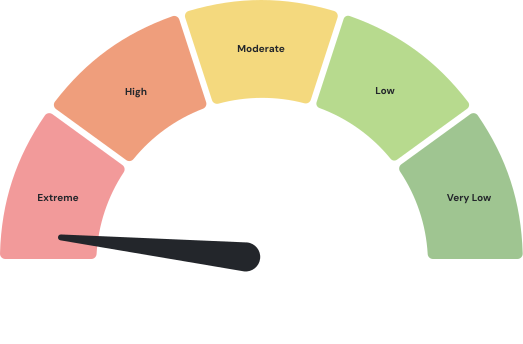
Level 1
No Assurance
Your projects operate reactively with no consistent checks or data integrity controls, resulting in limited visibility and high schedule risk.
Summary
Your projects operate reactively with no consistent checks or data integrity controls, resulting in limited visibility and high schedule risk.
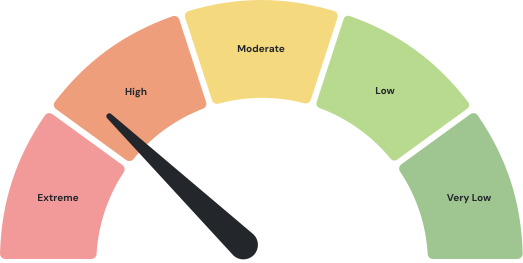
Level 2
Tick-Box Assurance
Basic schedule checks are performed manually for compliance, but processes remain siloed, inconsistent, and difficult to verify.
Summary
Basic schedule checks are performed manually for compliance, but processes remain siloed, inconsistent, and difficult to verify.
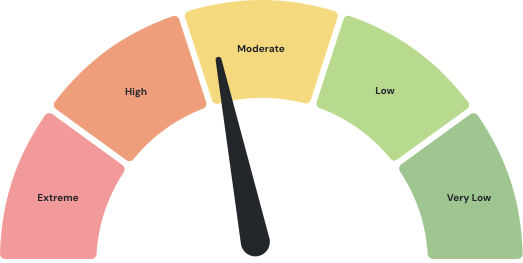
Level 3
Automated Assurance
Schedule, change, and risk processes are managed through centralized software with audit trails, improving consistency and traceability.
Summary
Schedule, change, and risk processes are managed through centralized software with audit trails, improving consistency and traceability.
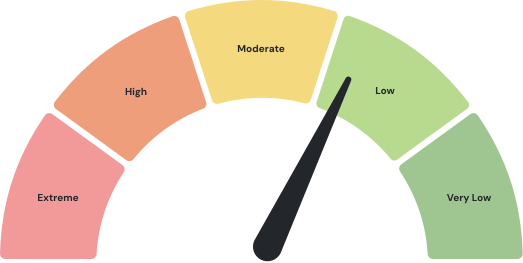
Level 4
Integrated Assurance
Your organization enforces standardized, automated assurance processes across portfolios, providing real-time visibility and reliable control.
Summary
Assurance is standardized and integrated across all projects and portfolios. Data Integrity, Change & Delay, Risk Control, and Reporting operate through a connected ecosystem. Processes are enforced to company standards and fully traceable.
Level 5
Proactive Organization
Your assurance system enforces standards automatically, maintains full auditability, and alerts when checks fall outside compliance, enabling true predictive control.
Summary
The organization operates with real-time, predictive, and self-monitoring assurance. Standards are enforced automatically, audit logs are complete, and the system alerts managers when checks are missed or fail to meet standards. Assurance is predictive, preventive, and performance-optimizing.

- Schedule quality, change/delay, and risk processes follow locked company standards.
- Every action is timestamped, auditable, and visible to managers in real time.
- The system automatically alerts when checks are overdue or noncompliant.
- Predictive analytics identify risks and recommend actions before issues occur.
- Continuous learning drives improvement across planning, resourcing, and execution.

- Projects are consistently delivered on time and within budget (±5%).
- Assurance data provides foresight, not just oversight.
- The organization adapts and improves through data-driven learning.

- Use predictive data to continually optimize planning and resource allocation.
- Expand AI-enabled insights to broader performance areas.
- Benchmark assurance maturity across portfolios to sustain excellence.
- DCMA 14-point checks are done occasionally, often before reviews.
- Change tracking and delay analysis happen irregularly or reactively.
- QSRA is performed once per project using templates, not actual data.
- Reports are shared monthly or quarterly, showing lagging indicators.
- Processes are siloed with no integration or cross-verification.
- Overruns are common (20–60%).
- Issues surface late in the project lifecycle.
- Data can’t be fully trusted and often requires manual correction.
- Move toward automated schedule integrity checks.
- Adopt consistent assurance standards across all projects.
- Begin capturing baseline changes, logic errors, and delay causes systematically.
- Automated DCMA and schedule health checks are run with every update.
- Baselines and version control are managed automatically.
- Change and delay analysis are performed using centralized software with audit logs.
- Risk assessments (QSRA) are conducted regularly using standardized templates.
- Reporting is automated but focused on project-level data rather than portfolio insight.
- Reduced rework and improved consistency.
- Moderate overruns (10–40%) due to partial integration.
- Managers can verify that required processes have been completed correctly.
- Integrate schedule, change, and risk data into one platform.
- Standardize frequencies and enforce correct process execution.
- Expand reporting dashboards to program and portfolio levels.
- All assurance disciplines share the same integrated platform.
- Automated processes enforce correct methods and frequencies.
- Audit logs verify what was done, when, and by whom.
- Executives and PMO have real-time dashboards showing portfolio health.
- Risk, schedule, and change data are triangulated for predictive insights.
- Projects are typically delivered within 0–10% of plan.
- Data is trusted and used for proactive decision-making.
- Assurance becomes part of organizational culture, not an afterthought.
- Deploy predictive analytics to anticipate risks and compliance gaps.
- Implement automatic notifications for missed or incomplete checks.
- Correlate assurance trends with performance data to drive continuous learning.
- Schedule quality, change/delay, and risk processes follow locked company standards.
- Every action is timestamped, auditable, and visible to managers in real time.
- The system automatically alerts when checks are overdue or noncompliant.
- Predictive analytics identify risks and recommend actions before issues occur.
- Continuous learning drives improvement across planning, resourcing, and execution.
- Projects are consistently delivered on time and within budget (±5%).
- Assurance data provides foresight, not just oversight.
- The organization adapts and improves through data-driven learning.
- Use predictive data to continually optimize planning and resource allocation.
- Expand AI-enabled insights to broader performance areas.
- Benchmark assurance maturity across portfolios to sustain excellence.
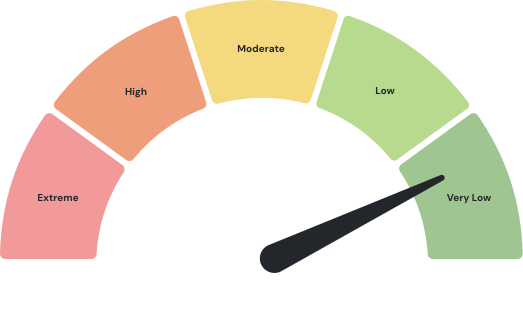
Where Your Processes Benchmark on the Schedule Assurance Maturity Matrix
Data Integrity
Level 1
No Assurance
No schedule health checks are performed. Logic errors, missing dependencies, and unrealistic durations go unnoticed.
Level 2
Tick-Box
Assurance
Basic checks (e.g., DCMA 14-point or similar) performed as a tick-box only. ctions to correct issues only taken when requested by project executives. Identifies initial issues but no ongoing assurance.
Level 3
Automated
Assurance
Level 4
Integrated
Assurance
Advanced checks (beyond DCMA) performed on each update without manipulation, supporting other areas of schedule assurance, verified against a company standard, and visible at programme and portfolio level.
Level 5
Proactive
Organization
Organisation learns from schedule quality data over time. Insights inform policies, data standards, training, and are integrated into risk management (e.g., correlating poor quality to risk exposure), and scheduling practices are continuously improved. Schedule integrity is regarded as a company KPI.
Change & Delay Management
Level 1
No Assurance
No checks are performed to identify what has changed since the previous update, or what caused delay. Litigation defence is largely impossible.
Level 2
Tick-Box
Assurance
Checks are performed infrequently throughout the project, primarily for compliance rather than insight. Baseline slippage and version control are not well understood. Comprehensive analysis only occurs after claims or disputes arise. Approach is reactive and costly.
Level 3
Automated
Assurance
A comprehensive analysis is automatically triggered for every update and contractual/scope change, almost all of the analysis is automated, and all team members have access without manipulation. Audit logs capture all actions.
Level 4
Integrated
Assurance
Change & Delay Management is fully integrated with Risk Control and Assurance Reporting processes. Programme and Portfolio-wide access is available. Detailed variance analysis possible for any schedule version, fully automated and standardised. Ability to link changes to delays, breakdowns by activity code, and third-party accountability.
Level 5
Proactive
Organization
Fully automated and integrated processes across portfolio and projects. Continuous improvement culture embedded.
Risk Control
Level 1
No Assurance
No QSRA process. Large jumps to milestone delivery dates are to be expected.
Level 2
Tick-Box
Assurance
A “tick-box” analysis at the start of the project using templated risk and uncertainty inputs.
Level 3
Automated
Assurance
Periodic analysis performed each update cycle (e.g., monthly), and whenever significant change occurs (e.g., contract or scope change), using templated risk and uncertainty inputs that produces mitigation actions that are managed to completion. Analysis is almost entirely automated. Audit logs capture all actions.
Level 4
Integrated
Assurance
AI is leveraged as a triangulation measure, Risk Control is fully integrated with Data Integrity, Change & Delay Management and Assurance Reporting processes, and learning is both productivity and variance-based.
Level 5
Proactive
Organization
An organisation that learns from actualised risks & data to inform the settings & frequency of the risk analysis, and the standards for the planning process across all work. Variance is a core company KPI.
Assurance Reporting
Level 1
No Assurance
Generic & ad-hoc. Insights are produced upon request and shared via unstructured means (emails, chats, slide decks). There is no set reporting rhythm.
Level 2
Tick-Box
Assurance
Generic recurring. Reports are shared on a regular rhythm (e.g., monthly or quarterly). Reports are generic across all roles and projects. Everyone receives the same information.
Level 3
Automated
Assurance
Validated, tailored, automatic, recurring reports are produced for each executive and project lead. Reports cannot be manipulated with bias, and combine narrative with data and are consistent across cycles. Audit logs capture all actions.
Level 4
Integrated
Assurance
Validated, tailored, on-demand. Executives and teams can self-create personal, tailored, unbiased reports, alongside the tailored automatic recurring reports, covering the whole portfolio.
Level 5
Proactive
Organization
Actively pushed via AI. Insights and decisions are actively pushed to the right people at the right time, with supporting data and narrative. Decision-making is coordinated across roles using cloud and AI technologies to optimise delivery in real time.
Improve your assurance workflows.
| Schedule Assurance Level |
Theme | Typical Overrun Exposure | Data Integrity | Change and Delay Management | Risk Control | Assurance Reporting | |
|---|---|---|---|---|---|---|---|
| Schedule | Cost | ||||||
| 5 | Proactive Organization | -5 to 5% | -5 to 5% | Organization learns from schedule quality data over time. Insights inform policies, data standards, and training, and are integrated into risk management, for example correlating poor quality to risk exposure. Scheduling practices are continuously improved. Schedule integrity is regarded as a company KPI. | Fully automated and integrated processes across portfolio and projects. Continuous improvement culture embedded. | An organization that learns from actualised risks data to inform the settings and frequency of the risk analysis, and this informs the planning process across all work. Variance is a core company KPI. | Actively pushed via AI. Insights and decisions are actively pushed to the right people at the right time, with supporting data and narrative. Decision making is coordinated across roles using cloud and AI technologies to optimise delivery in real time. |
| 4 | Integrated Assurance | 0 to 10% late | 0 to 10% over budget | Advanced checks, beyond DCMA, performed on each update without manipulation, supporting other areas of schedule assurance, verified against a company standard, and visible at program and portfolio level. | Change and Delay Management is fully integrated with Risk Control and Assurance Reporting processes. Program and portfolio wide access is available. Detailed variance analysis is possible for any schedule version, fully automated and standardised. Ability to link changes to delays, breakdowns by activity codes, and third party accountability. | AI is leveraged as a triangulation measure. Risk Control is fully integrated with Data Integrity, Change and Delay Management, and Assurance Reporting processes, and learning is productivity based and variance based. | Validated, tailored, on demand. Executives and teams can self create personal, tailored, unbiased reports, alongside the tailored automatic recurring reports that cover the whole portfolio. |
| 3 | Automated Assurance | 10 to 30% late | 10 to 40% over budget | Advanced checks, beyond DCMA, are performed automatically on each schedule update. Results are verified against a project standard and are made available to all project members without manipulation. Audit logs capture all actions. | A comprehensive analysis is automatically triggered for every update and contractual or scope change. Most of the analysis is automated, and all team members have access without manipulation. Audit logs capture all actions. | Periodic analysis is performed each update cycle, for example monthly, and whenever significant change occurs, for example contract or scope change. Templated risk and uncertainty inputs are used, which produce mitigation actions that are managed to completion. Analysis is almost entirely automated. Audit logs capture all actions. | Validated, tailored, automatic, recurring reports are produced for each executive and project lead. Reports cannot be manipulated with bias, and are consistent across cycles. Audit logs capture all actions. |
| 2 | Tick-Box Assurance | 20 to 40% late | 20 to 60% over budget | Basic checks, for example DCMA 14 point or similar, performed as a tick box only. Actions to correct issues are taken only when requested by project executives. Identifies initial issues but no ongoing assurance. | Checks are performed infrequently throughout the project, primarily for compliance rather than insight. Baseline slippage and version control are not well understood. Comprehensive analysis usually occurs after claims or disputes arise. The approach is reactive and costly. | A tick box analysis at the start of the project using templated risk and uncertainty inputs. | Generic recurring reports are shared on a regular rhythm, for example monthly or quarterly. Reports are generic across all roles and projects. Everyone receives the same information. |
| 1 | No Assurance | 30 to 50% late | 30 to 80% over budget | No schedule health checks are performed. Logic errors, missing dependencies, and unrealistic durations go unnoticed. | No checks are performed to identify what has changed since the previous update, or what caused delay. Litigation defence is largely impossible. | No QSRA process. Large jumps to milestone delivery dates are expected. | Generic ad hoc insights are produced upon request and shared via unstructured means, for example emails, chats, and slide decks. There is no set reporting rhythm. |
View The Schedule Maturity Matrix
Get an oversight on how you can take your schedule maturity to the next level.