

Accountability slows decisions down, for good reason
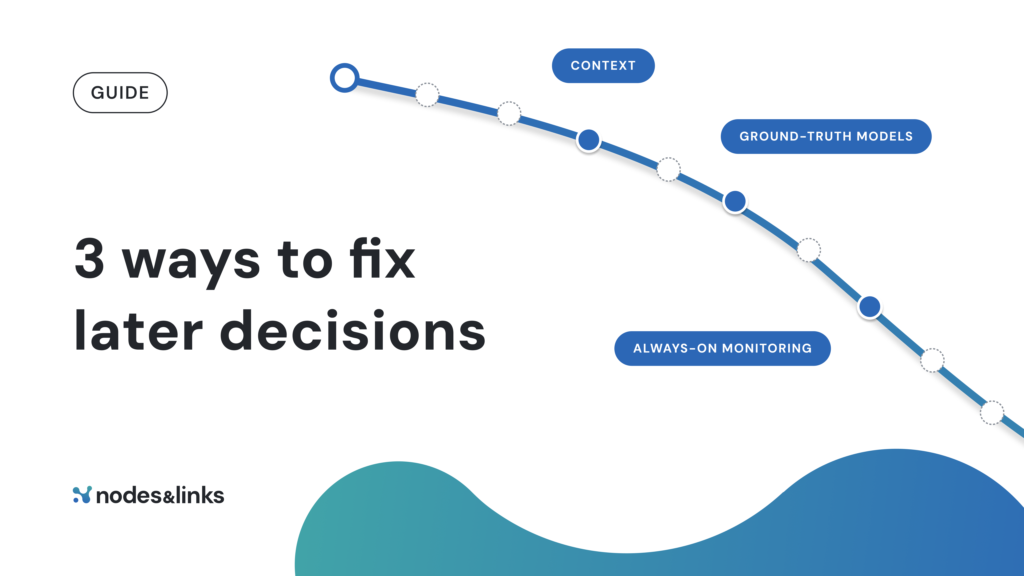
1. Bring all your context into one place
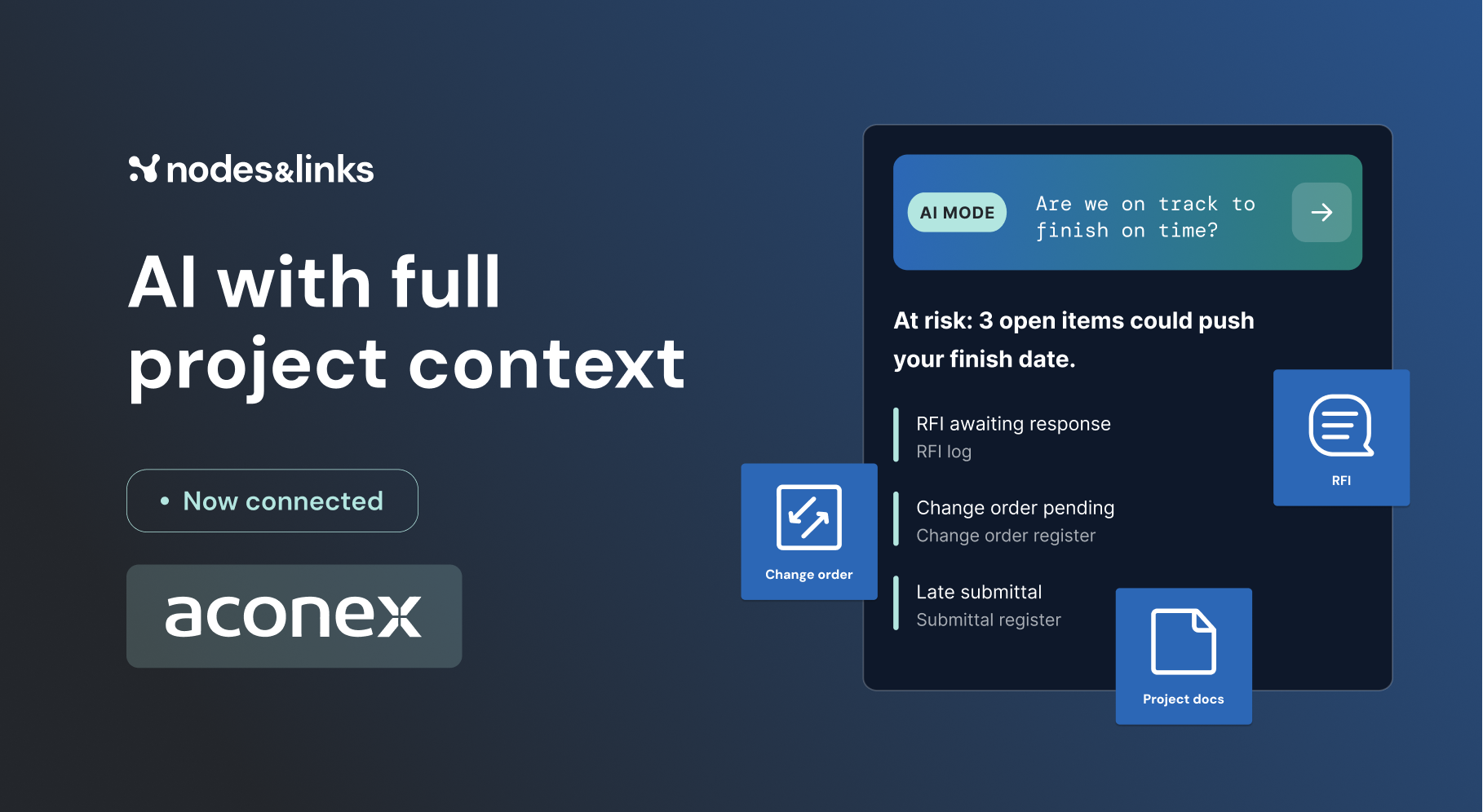
The schedule records what a project intends to do. The reasons dates move live elsewhere, in RFIs, change orders, submittals and correspondence. That's why we've been connecting Nodes & Links to the systems where this context lives, including Aconex, Oracle Unifier and Autodesk Forma. An AI that reads the schedule alongside those records can explain why a date is moving, as well as when.

2. Run it through ground-truth models
Context on its own produces answers that sound right. Running it through proven project controls models, such as quantitative schedule risk analysis, delay analysis and earned value, produces answers you can trace and defend. The expert stays in charge of the decision, and the AI shows its working.
3. Switch on always-on monitoring
Monthly reporting describes what has already happened. Leading indicators, such as how reliably contractors deliver their short-term plans, show where a project is likely to slip next, while it is still cheap to fix.
The result: earlier decisions you can defend
Get all three right and the timing of decisions changes. On a major shut down project, ECS Associates used this approach to trace 42.7% of completion risk to a single work area and surface up to 10 days of delay exposure with two months still to act. The decision came while it still mattered, with the evidence to back it.
The questions change too.
Ask AI Mode “Are we on track?” with the schedule alone and you get a date. Ask with the RFIs, change orders and submittals behind it, and you get the activities at risk, the open items holding them up and what to clear first.
A recovery plan gets tested against what is actually blocking the work.
A claim starts from a cited timeline drawn from the project record.
Reported progress gets checked against inspections and submittals before it reaches the board.
The expert still makes the call, with a fuller picture and more time to act.That is the shift worth aiming for: accountability kept intact, and decisions that arrive in time.

Get the full framework in our free guide
Our new guide, Better decisions: the guide to AI that backs project experts, sets out the three foundations in detail, with 7 questions to ask on your own projects.
To see these foundations on live programs, browse our customer stories or book a demo below.